Dubai is one of the most dynamically growing real estate and tourism centers in the world. Thanks to strategic planning, political stability and strict regulations, it offers a certainty that many markets cannot guarantee. The city combines modern technologies with infrastructure development and is becoming a target not only for large corporations, but also for individual investors. In recent years, Dubai has been gaining strong attention from the younger generation, including Slovaks, who are looking for new opportunities in an innovative environment. Miroslava Nieuwenhuis, CEO and co-founder of IQPRO Real Estate, also talks about these topics in an interview.
What factors make Dubai one of the main centers of the global real estate market in 2025?
Dubai has become a magnet for investors, mainly thanks to the support of the government, which is purposefully developing two pillars of the economy - tourism and real estate. The legal framework that protects foreign investors and their finances through escrow accounts also plays a key role. All transactions and rental relationships are strictly regulated and digitalized, while property management is possible remotely via online platforms. Dubai is also investing massively in artificial intelligence (AI), which further increases transparency and efficiency.
Which segments of the real estate market are currently the most attractive?
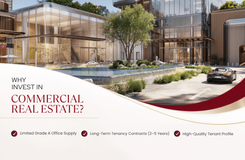
Commercial real estate offers the highest returns, with yields of 12 to 15 percent per year. Demand is huge as Dubai has become a major hub for international companies and financial institutions in the Middle East and Asia. The severe shortage of Grade A office space, which is 99 percent occupied, has led developers to offer commercial off-plan projects with gradual repayments in addition to residential projects.
How is the luxury sector doing?
Luxury properties in prime locations by the water or in financial centers are constantly increasing in value, as their number is limited on the market. They are attractive to investors who have capital in the tens of millions of euros and are looking for prestigious projects with the potential for high appreciation. Interestingly, the average prices of luxury villas on the Palm Jumeirah have increased by up to 900 percent compared to their original prices in about twenty years.
What are the average yields for residential rentals?
The residential market is stable, with a net annual yield of around seven percent. This is higher than in London or New York, where the return is around four to five percent. Moreover, tenant protection is strongly enshrined in legislation, unilateral rent increases are limited to a maximum of twenty percent according to the Rental Index, and all contracts are registered. In the event of early termination of the lease, the tenant pays a penalty, which protects the owners' income. On average, the property is rented within one to three months.
To what extent does legal protection for tenants contribute to market stability?
Legal protection is essential. The owner is obliged to fix technical faults within 48 hours or provide alternative accommodation. Disputes are resolved by the Real Estate Regulatory Agency, which acts as an arbitration authority. This system prevents speculation and strengthens the trust of both parties.
How does the geopolitical situation and security environment affect capital inflows?
Dubai benefits from its neutrality and stability. Capital comes mainly from the United Kingdom, the Middle East, the USA, India and China. The city is one of the safest in the world. The government openly emphasizes that even a woman can feel safe on the streets at night. This factor attracts families and individuals looking for stability. Tax policy plays a significant role - personal income tax is zero and corporate tax is nine percent.
What options do smaller investors have?
Investment apartments with a budget of 200-300 thousand euros are available in neighborhoods such as Jumeirah Village Triangle, Dubai Sport City, Motor City or the newly emerging locations Al Wasl Gate and Dubai South. The net rental return is around 7.3 percent. An interesting alternative are Holiday Homes, i.e. short-term rentals based on the principle of hotel apartments. This segment is strictly regulated, requiring a special license and registration with the Dubai Tourism Department.
How does Dubai support long-term market development?
The city is guided by the Urban Plan 2040 strategy. A key project is Al-Maktoum Airport, which is set to become the world's largest airport. Its development will bring a million jobs and create a huge demand for housing and office space. Infrastructure development, new metro lines and investments in AI will be key factors in the coming years. The most discussed development projects include Palm Jebel Ali, which has been revived after years, and Dubai South, which has the ambition to offer residential and commercial space for over 200,000 residents.
In Slovakia we often hear about the lack of predictability. How is it in Dubai?
In Dubai, the situation is different. The city authorities strictly adhere to the plans they set. Urban Plan 2040 was presented in 2020 and its implementation continues according to schedule. Predictability and continuity attract not only large investors, but also entrepreneurs who appreciate clear rules of the game.
How do Slovaks engage in this environment?
Slovaks' interest in Dubai is growing. We see an increasingly younger generation of investors who are interested in technology, startups and innovative solutions. Many are moving to Dubai or opening businesses here. The share of young investors among Slovaks is approximately 70 percent.
Is there room in Dubai for alternative forms of housing, such as co-living?
Co-living is currently practically impossible in Dubai. Every resident must have a registered lease agreement in their own or their partner's name. This agreement is also necessary to open a bank account or complete other official transactions. The regulations therefore favor more traditional forms of housing.
How is Dubai coping with environmental challenges?
Environmental aspects are becoming increasingly important. Developers are introducing new eco-friendly projects equipped with solar panels or modern air conditioning systems with a smaller ecological footprint. They are also taking into account new sustainability standards that respond to the climatic conditions of the region. An example is the project The Sustainable City, which is fully oriented towards renewable energy sources and zero waste.
What do Slovaks ask most often when buying property in Dubai?
The most common question is the reliability of the developer. In the past, there were bankruptcies of development companies, which caused concern. Today, the system is much stricter. The developer must deposit twenty percent of the project value into an escrow account before the project begins, and the remaining funds from buyers are managed by the Dubai Land Department. The money can only be released after a successful inspection of the construction. If the developer fails, another entity takes over the project, thus protecting investments. Thanks to this system, it was possible to regain the trust of investors and attract new players from Slovakia.